
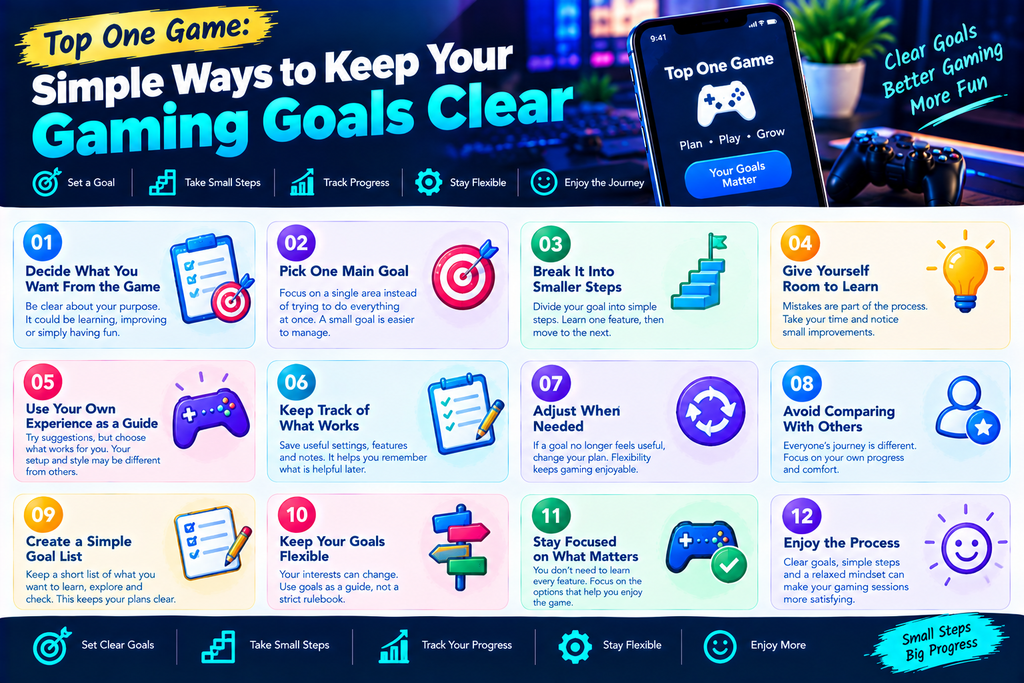
Gaming can be more enjoyable when you know what you want from each session. Some players like to improve their skills, while others simply want a few minutes of entertainment. Having a clear purpose can make your top one game experience feel less random and easier to manage.
You do not need a complicated plan. A few simple goals can help you stay focused, notice your progress, and avoid spending time on things that do not add much value to your gaming experience.
Start by Deciding What You Want From the Game
Before opening the game, think about what you actually want to do. Your goal can be very simple.
You might want to learn a feature, understand a new option, practice a particular skill, or simply enjoy some free time.
Pick One Main Goal
Trying to improve everything at once can make gaming feel confusing. Choose one area to focus on instead.
For example, you could decide to:
- Learn how a new feature works
- Improve your understanding of the controls
- Practice a particular game action
- Explore an unfamiliar section
- Become more comfortable with the platform
A small goal is easier to understand than a long list of tasks.
Keep the Goal Realistic
Your goal should match your current experience. A beginner may need more time to understand basic features, while an experienced player may prefer a more specific challenge.
Do not compare your progress with someone who has been using a game for much longer. Your own improvement is a better measure.
Turn Large Goals Into Small Steps
A large goal can feel difficult when you look at it all at once. Breaking it into smaller parts makes the process easier.
Suppose you want to become more comfortable using the top one game. Instead of trying to understand every feature in one session, focus on one part at a time.
Learn One Feature First
Start with a feature you actually use. Read the available information and test it carefully.
Once you understand it, move to another part of the game.
This approach gives you time to understand how different options work without creating unnecessary confusion.
Use Simple Progress Markers
You can keep track of progress with short notes.
For example:
- Feature understood
- Setting reviewed
- New option tested
- Question still unclear
- Next item to learn
A simple list can show you what you have already covered.
Give Yourself Room to Learn
Not every gaming session will produce a major improvement. Sometimes you may spend time learning something and still need another attempt.
That is normal.
The purpose of setting goals is not to make gaming feel like work. It is to give your time a little more direction.
Do Not Expect Perfect Results
A mistake can show you what needs more attention.
If you misunderstand an option, take another look at the instructions. If something does not work as expected, check the information available before trying random solutions.
With the top one game, learning can become easier when you treat mistakes as useful information rather than a reason to become frustrated.
Notice Small Improvements
Progress is not always obvious.
You may remember a setting that confused you earlier, understand a feature faster, or make fewer mistakes when using the same option again.
These small changes matter. They show that your understanding is improving.
Use Your Own Experience as a Guide
Advice from other players can be useful, but your own experience is also important.
A method that works well for another person may not suit the way you use a game.
Test Suggestions Carefully
When you see a gaming tip online, do not assume it will work exactly the same way for you.
Read the details first. Check whether the information applies to your version and device.
If the advice involves a topone apk, make sure you understand what file you are using and where it came from before installing anything.
Separate Facts From Personal Preferences
Someone may say that a particular setting is “the best.” That may simply be their personal preference.
A better approach is to test the option yourself when it is safe and appropriate.
You can then decide whether it actually improves your experience.
Keep Track of What Works
After trying different options, remember the ones that make your gaming experience easier.
You do not need a detailed journal. A few short notes are enough.
Create a Small Personal List
Your list could include:
- Settings you prefer
- Features you use often
- Controls that feel comfortable
- Options you do not need
- Useful instructions
- Questions you want to check later
This information can be helpful when you change devices or reinstall the game.
Review Your Notes Occasionally
Old notes may become less useful after an update. If the game changes, check whether your saved information is still correct.
This is especially important when dealing with a top one game download, because instructions can change between versions.
Know When a Goal Is No Longer Useful
Goals should help you, not limit you.
If you planned to learn one feature but discover that it is not useful for the way you play, there is nothing wrong with changing direction.
Adjust Instead of Forcing It
Maybe you started with one setting and found another feature more interesting. Move to the new subject if it makes more sense.
Flexible goals can make gaming feel more natural.
Stop Chasing Unnecessary Progress
You do not need to unlock or understand every available option.
Focus on the features that actually matter to you. Ignoring something unnecessary can be just as useful as learning it.
Avoid Comparing Your Progress With Others
Online gaming content can make it seem like everyone else knows more than you.
Remember that videos, screenshots, and posts usually show selected moments. They do not show every mistake or failed attempt behind them.
Your progress may look different from someone else’s.
With top one game sessions, focus on what you understand today compared with what you understood before. That gives you a more realistic picture of improvement.
Build a Simple Goal List
A small list can keep your gaming plans clear without making the experience complicated.
Try this structure:
Today: One thing I want to understand.
Next: One feature I may explore later.
Learned: One useful thing I discovered.
Question: One point I still need to check.
This format takes only a few moments to use and can prevent you from forgetting useful information.
Make Your Gaming Goals Flexible
Your interests can change over time. A goal that feels useful today may not matter next week.
That is completely normal.
The top one game experience should still feel enjoyable. Use goals as a guide rather than a strict rulebook.
If a session becomes repetitive, try learning something different. If you are already comfortable with a feature, move on to another area.
Final Thoughts
Clear goals can give your top one game sessions a simple sense of direction. You do not need complicated plans, long checklists, or constant tracking.
Choose one useful target, break it into smaller steps, notice your progress, and adjust your plans when needed. Keep your expectations realistic and let your own experience guide your choices.
A little structure can help you get more from each session while keeping gaming relaxed and enjoyable.